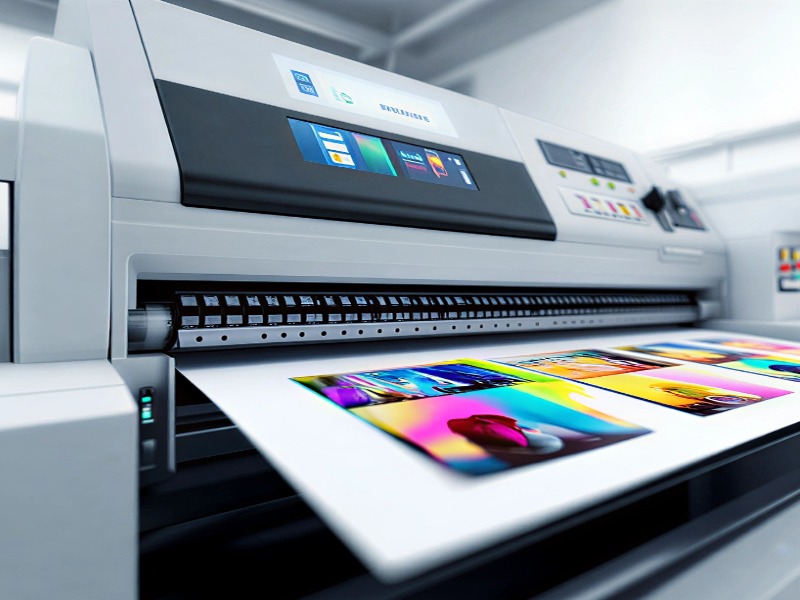
What are roll-fed stickers?
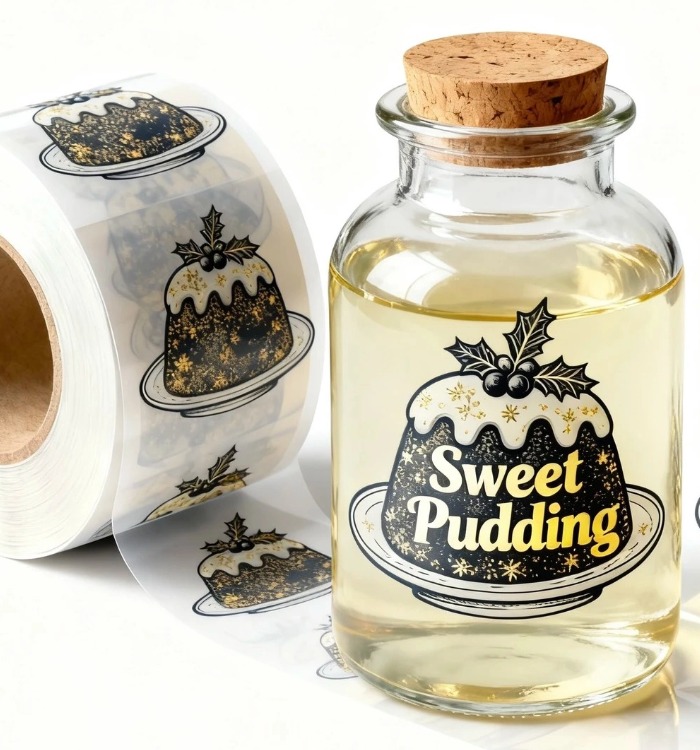
Why is it called “Roll-fed Self-adhesive Label”?
Roll-fed
- Form: Unlike individual sheet labels, it comes in a continuous roll. This design is specifically tailored to match the feeding systems of automatic labeling machines.
- Advantages: It enables high-speed, uninterrupted automatic labeling (up to tens or even hundreds of pieces per minute), significantly boosting production efficiency, reducing labor costs, and ensuring consistent and precise label placement.
Self-adhesive
- Structure: This is the core feature. A standard roll-fed self-adhesive material consists of three layers (from top to bottom):
- Facestock: The carrier for printed information, available in various materials such as coated paper, thermal paper (used for supermarket receipts), PET (plastic), PVC, and synthetic paper.
- Adhesive: Applied to the back of the facestock. It is categorized into permanent adhesive, removable adhesive, and frozen food adhesive based on properties like stickiness, temperature resistance, and removability.
- Liner (Release Paper): It holds the facestock and adhesive, with a silicone coating on the surface for easy adhesive peeling. Liners are typically tough (e.g., glassine paper, kraft paper) and are peeled off and recycled during automatic labeling.
- Working Principle: During application, automatic labeling machines peel off the liner and accurately apply the adhesive-backed label onto products.
Label
It is ultimately a carrier of information, which can display the following content through printing:
- Product Information: Product name, ingredients, specifications
- Brand Identity: Logo, patterns
- Barcodes/QR Codes: For inventory management and traceability
- Usage instructions, shelf life, pricing, etc.
Key Features and Advantages
- High-efficiency Automation: Designed exclusively for machinery, it is an indispensable component of modern production lines.
- Strong Consistency: Machine labeling ensures highly uniform placement, pressure, and flatness, resulting in a neat and attractive appearance.
- High Adaptability: Can be integrated with various production lines (filling lines, packaging lines, assembly lines).
- Powerful Information-bearing Capacity: Capable of printing complex graphics, text, and variable data (e.g., serial numbers, barcodes).
- Diverse Material and Adhesive Options: Meets different product requirements (e.g., waterproof, scratch-resistant, low-temperature resistant, repositionable).
Common Facestock Materials
- Coated Paper: The most widely used, cost-effective option for general product information labels and outer carton labels.
- Thermal Paper: Forms images via heat from the print head without requiring ribbons, suitable for supermarket price tags, courier waybills, and receipts.
- PET (Polyester Film): Waterproof, oil-resistant, scratch-resistant, and extremely tough, ideal for labels on electronic products, cosmetics, and chemicals.
- PVC (Polyvinyl Chloride): Flexible, durable, and waterproof, commonly used for bank cards, membership cards, and outdoor equipment labels.
- Synthetic Paper/PP (Polypropylene): Waterproof, tear-resistant, with a paper-like texture and enhanced toughness, applicable to outdoor and laundry product labels.
- Specialty Materials: Such as fragile paper (for anti-counterfeiting), fabric, and aluminum foil paper.
Main Application Scenarios
Roll-fed self-adhesive labels cover almost all fields requiring automated identification:
- Food and Beverage: Production dates, shelf lives, and ingredient lists on bottled water, beverage bottles, and packaged foods.
- Daily Chemicals: Labels on shampoo bottles, cosmetic containers, and detergent bottles.
- Pharmaceutical Industry: Instruction labels on medicine blister packs, vials, and medical devices.
- Electronic Products: Labels on mobile phone batteries, appliance nameplates, and cable markings.
- Logistics and Warehousing: Courier waybills, warehouse shelf labels, and shipping carton labels.
- Retail: Product price tags and barcode labels.
- Industrial Manufacturing: Component identification, pipeline marking, and safety warning labels.
Differences Between Roll-fed Self-adhesive Labels and Sheet Self-adhesive Labels
| Feature | Roll-fed Self-adhesive Labels | Sheet Self-adhesive Labels |
|---|---|---|
| Form | Roll-shaped | Individual sheets (e.g., A4 size) |
| Labeling Method | Mainly automatic labeling machines | Mainly manual application or manual application after printing with a printer |
| Production Efficiency | Extremely high, suitable for mass production | Low, suitable for small-batch, personalized needs |
| Printing Method | Usually rotary printing presses (flexographic, letterpress, digital rotary) | Usually sheet-fed printing presses (offset, digital printers like laser/inkjet) |
| Cost Consideration | Requires plate making/equipment investment, with extremely low unit price for large batches | No need for special equipment, more flexible and economical for small batches |
| Applicable Scenarios | Factory assembly lines, large-scale product identification | Office supplies, small-quantity products, samples, special event labels |
Summary
Roll-fed self-adhesive labels are the core material for achieving automated and standardized product information identification in modern industrial production. When you see a neatly applied label on a bottle of beverage, a box of medicine, or an electronic product, it is most likely a roll-fed self-adhesive label used by a high-speed automatic labeling machine.