What is a waterproof sticker?
- Face Material: This is the “skin” of the label and the area where text and patterns are printed. Its waterproof performance is largely determined by this layer. It is typically made of non-paper synthetic materials that are inherently water-repellent and resistant to water immersion.
- Adhesive: This is the soul of a “self-adhesive” label. Waterproof labels use special waterproof adhesives (such as latex acrylic or solvent-based acrylic adhesives). Even after prolonged immersion in water, the adhesive will not emulsify or lose its tackiness, and can still maintain strong adhesion once dry.
- Liner: Refers to the backing paper that is peeled off before application. Although it does not directly contribute to waterproofing, high-quality liners (such as glassine release paper) ensure smooth die-cutting and peeling even in humid environments.
Common Types of Waterproof Self-Adhesive Materials
Synthetic Paper/PP/PE (Polypropylene/Polyethylene)
Features: The most economical and widely used waterproof material. It feels like thick paper but is essentially a plastic film. With a semi-matte or matte surface, it delivers excellent printing results and offers scratch and tear resistance. It is divided into thermal transfer and general-purpose types; the former is specially designed for barcode printing with strong ribbon adhesion.
Applications: Labels for daily chemical product bottles (shampoo, body wash), kitchen utensil labels, outdoor equipment tags, and logistics labels.
PVC (Polyvinyl Chloride)
Features: Flexible, durable, and highly moldable. It comes in a variety of surface finishes including matte, glossy, and textured options, with a wide range of thicknesses available. It boasts excellent chemical resistance, oil resistance, and tensile strength.
Applications: Electrical appliance nameplates, instrument panels, outdoor equipment nameplates, chemical barrel labels, and waterproof wristbands.
PET (Polyethylene Terephthalate Film)
Features: A top-tier waterproof material. Rigid in texture, it is heat-resistant, chemical-resistant, and extremely durable. Its surface is usually very smooth (glossy or matte), with outstanding dimensional stability and tear resistance.
Applications: Labels for electronic products (e.g., mobile phone battery labels), automotive component tags, industrial environment labels, high-temperature resistant labels, and high-end durable labels.
Vinyl
Features: Similar to PVC but with an emphasis on outdoor durability. It is usually equipped with permanent or removable high-strength adhesive, and the adhesive layer is also waterproof. It is ideal for curved surface application.
Applications: Outdoor signage, vehicle decals, wall decals, tool identification labels, and marine labels.
Other Special Materials
- Waterproof pearlescent paper (paper surface coated with a waterproof layer)
- Tyvek (a DuPont patented tear-resistant synthetic paper that is waterproof and breathable, commonly used in high-end outdoor and industrial scenarios)
Main Application Scenarios
- Daily Chemicals, Food & Beverage: Packaging that may be refrigerated or exposed to water, such as shampoo bottles, beverage bottles, and sauce jars.
- Outdoor & Sports: Items exposed to rain and snow, including bicycles, fishing gear, camping equipment, and garden tools.
- Industry & Manufacturing: Mechanical equipment, chemical products, pipeline identification, and outdoor cable labels.
- Electrical & Electronics: Electrical appliances used in humid environments (washing machines, water heaters, small home appliances) and electronic component labels.
- Logistics & Transportation: Packages and boxes that may get damp during sea freight or cold chain logistics.
- Medical & Laboratory: Containers for instruments requiring cleaning and disinfection, and test tube labels.
- Bathroom Products: Personal care product packaging and labels for bathroom storage boxes.
How to Select and Identify?
Clarify the Usage Environment
- Occasional water exposure (e.g., condensation on beverage bottles): Economical synthetic paper (PP) is sufficient.
- Long-term dampness/immersion (e.g., outdoor, bathroom): Choose PVC or PET.
- Extreme environments (oil, chemicals, high temperature): PET is the top choice.
- Outdoor exposure to wind and sun: Select weather-resistant vinyl or dedicated outdoor PET.
Printing and Labeling Methods
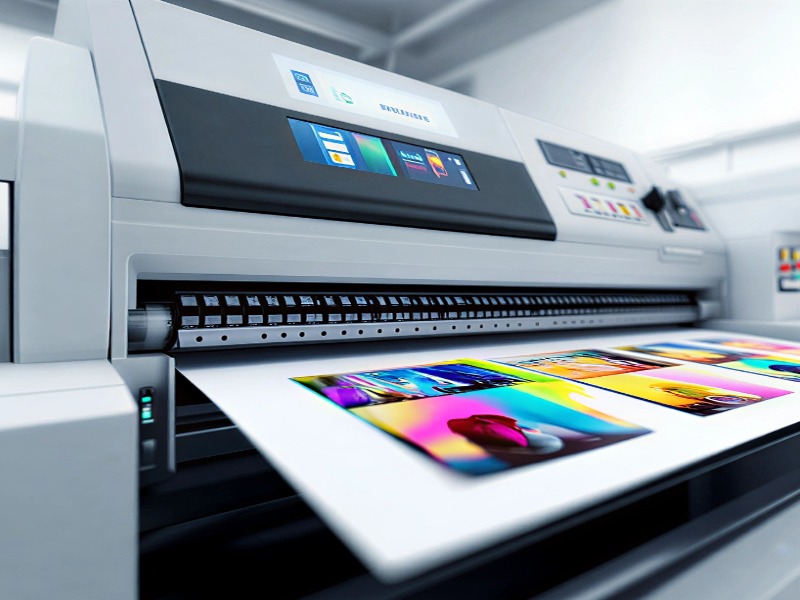
- For commercial printing (e.g., self-adhesive promotional stickers), all the above materials are suitable for UV ink printing, which provides excellent waterproof performance.
- For in-house printing:
- Inkjet printers: Must use inkjet-specific waterproof coated materials to prevent ink bleeding.
- Laser printers: Need to select heat-resistant materials (e.g., some PET and PP types) to avoid label melting inside the printer.
- Barcode printers (thermal transfer): Be sure to use corresponding thermal transfer-specific materials (e.g., wax-based, resin-based) and resin-based ribbons to ensure the printed content is waterproof and wear-resistant.
Simple Testing Methods
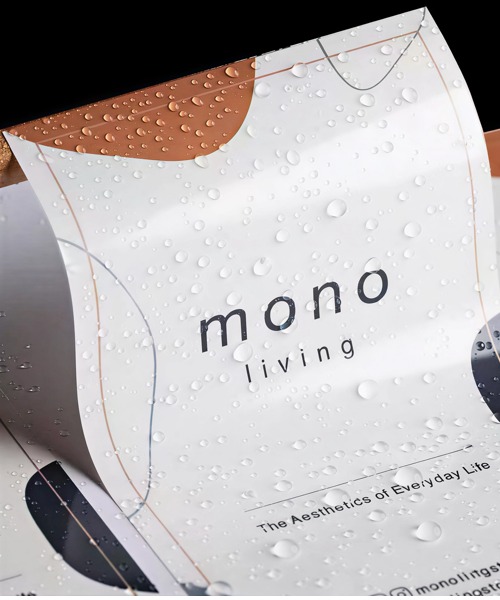
- Water Drop Test: Drop a water droplet on the label surface and observe if it forms beads. Paper-based materials will absorb water quickly and darken, while waterproof materials will either have rolling beads or no absorption for an extended period.
- Immersion Test: Soak a sample of the applied label in water for a period of time and check for edge lifting, peeling, or blurring of printed content.
Key Takeaways
- The core of waterproof self-adhesive labels lies in “materials”, which are essentially plastic films rather than paper.
- Waterproofing is a systematic project that requires a combination of waterproof face material, waterproof adhesive, and waterproof printing/labeling methods.
- Select materials based on the environment: PP for economy, PVC for durability, PET for top-tier performance, and vinyl for outdoor use.
- When printing in-house, always confirm the compatibility of materials with printers and ribbons.